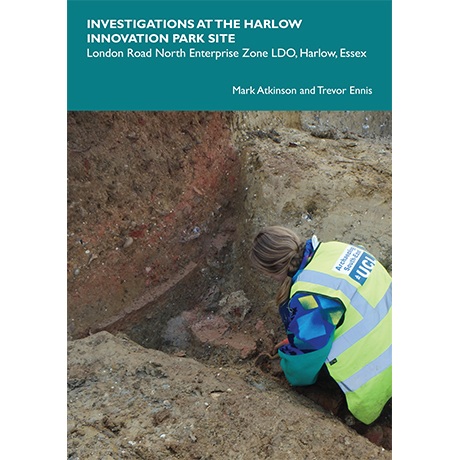
Investigations at the Harlow Innovation Park Site, London Road North Enterprise Zone LDO, Harlow, Essex
Archaeological investigations carried out 2013–2019, ahead of the construction of Harlow Innovation Park, revealed a fascinating range of Late Iron Age, Roman, Late Saxon and post-medieval remains, providing insights into the nature of land use just outside the Roman town and later settlement at Harlow. Originating as a Late Iron Age farmstead, reorganisation of the land following the Roman conquest included construction of the road between Harlow and London with distinctive agricultural use to either side. In the Late Saxon period, the site was occupied by a farmstead of possible ‘thegnly status’ – its courtyard complex of timber buildings being a rare discovery in Essex.
Detailed Description
Archaeological investigations carried out between 2013 and 2019, before the construction of Harlow Innovation Park, revealed a fascinating picture of land use from the Late Iron Age, Roman and Late Saxon periods through to the post-medieval. These discoveries provide a clearer picture of how people used this land over many centuries, just outside the Roman town and later settlement at Harlow.
The earliest activity on the site was a small farmstead dating to the Late Iron Age. After the Roman conquest, the area was a reorganised incorporating a routeway leading to the town, a small family cemetery and, perhaps most significantly, a distinctive system of fields for which a specialist horticultural use is suggested. Over time, the track became a more formal road linking Harlow to London, and the surrounding fields were further developed.
In the Late Saxon to early medieval period, the site was occupied by a farmstead of possible ‘thegnly status’ – this courtyard complex of timber buildings is a rare discovery in Essex.
In recent times, the south-eastern and eastern edges of Harlow have seen a great deal of development. The discoveries at Innovation Park form a major part of the emerging story of how this landscape has changed over time.
For all queries in regards to this Product please contact the following :-
louise.rayner@ucl.ac.uk