
F58 Practical Science Communication MasterclassesInfo Location Attendee Categories Contact More Info Event Information
DescriptionWhat does good science communication look like? Discover best practice and insider knowhow in three one-day practical workshops, covering science writing, video production, or artificial intelligence. Workshops will be led by award-winning working science journalists Noah Baker, Helen Pearson, and Richard Fisher. With a combined experience of more than 50 years at the top levels of science journalism, Noah, Helen, and Richard are honorary professors of practice, who teach on the MSc Science Communication course within UCL’s Science and Technology Studies department.
Workshop 1: Science writing workshop: How to write clearly for any audience 16th June 9:00am to 4:00pm.
Workshop 2: Science multimedia storytelling: Produce a video in a day 17th June 9.00am to 4.00pm.
Workshop 3: Science communication and AI: How to use AI tools smartly, critically, ethically 19th June 9.00am to 4.00pm.
Event Location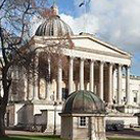
Attendee Categories2) Workshop 2 UCL Student/Staff.
Additional ItemsContactFor all queries relating to this Workshops please contact the following: Saheli Datta Burton
PLEASE ONLY CONTACT THE ONLINE STORE DIRECTLY IF YOU ARE EXPERIENCING PROBLEMS WITH YOUR DEBIT/CREDIT CARD PAYMENT, FOR ALL OTHER QUERIES RELATING TO THIS WORKSHOPS, INCLUDING CANCELLATIONS THESE SHOULD BE DIRECTED TO THE CONTACT DETAILS ABOVE. More InformationWorkshop 1: Science writing workshop: How to write clearly for any audience. Helen Pearson, Senior Editor, Nature Helen is an award-winning science journalist and editor at Nature. Named European Science Journalist of the Year 2025, she has over 20 years’ experience in science writing and is the author of two books.
This one-day, in-person course will help you produce clear, concise, engaging science writing for a wide range of audiences. Taught by award-winning science journalist and author Helen Pearson, it focuses on practical exercises to build experience in non-academic writing such as news, opinion, narrative and social media, while sharpening academic writing and increasing the reach and impact of your work. You will learn to get past the blank page, edit sentences to make them snappy, try out widely applicable journalistic skills (such as writing news stories and conducting an interview), develop your voice through free writing, and pick up tips on publishing your work in the media. Designed for academics and students, the course offers a supportive small-group setting with feedback on your work and insight into professional science journalism.
Workshop 2: Science Multimedia storytelling: Produce a video in a day.
Noah Baker, a multi-award winning science film-maker, podcaster, journalist and educator. Formerly Nature's Chief Multimedia Editor, Noah is a multimedia journalist and consultant, producing podcast and video stories that reach millions around the world.
This course teaches academics, scientists, students and beyond how to harness the power of video to share their expertise with the broadest of audiences. Throughout one hands-on day of workshops and learning you will produce your own video content, guided by multi-award-winning multimedia journalist Noah Baker. You will learn how to choose and shape science stories for any audience. You will begin to combine fundamental documentary principles with the latest production processes to shape engaging videos that climb the algorithms, picking up an industry secret or two along the way. Be it a reel, a YouTube short or a long form documentary - this course will ground you in the tools you need to create impact using the most trafficked content-type on the internet. All equipment will be provided.
Workshop 3: Science communication and AI: How to use AI smartly, critically, ethically.
Richard Fisher, Senior science and audience editor, Aeon magazine. Formerly at the BBC and New Scientist, Richard is a science journalist, author, and a senior commissioning editor at Aeon magazine, where he also advises on digital and audience strategy.
In this one-day in-person course, participants interested in communicating with popular audiences will learn how to get the best from generative AI in their work. With interactive discussion and hands-on exercises led by Richard Fisher – an experienced ex-BBC science journalist who teaches digital skills at UCL – attendees will explore the challenges, the trends, and the tools. We'll identify the benefits and pitfalls of AI, how to use it critically and reflectively, the lesser-known techniques and services, and look ahead to where the technology is headed next. The course is centred on science communication, but will cover territory relevant to anyone interested in media and communication. | ||||||||||||||||
London's global university

